MIT Lab Tours
We’re excited to offer a limited number of MIT lab tours and workshops in conjunction with the MIT Energy Conference! These tours provide a behind-the-scenes look at groundbreaking energy research across several MIT facilities.

2026 LAB TOURS
MIT.nano Lab

MIT.nano is MIT’s cutting-edge nanotechnology facility, featuring state-of-the-art labs and cleanrooms along with sustainable design. The facility implements over 60 energy conservation measures to reduce emissions and supports a variety of environmentally impactful research projects.
AeroAstro Lab

MIT’s Department of Aeronautics and Astronautics integrates sustainable practices into aerospace design and operations, pioneering near-zero impact aircraft and sustainable space systems.
Senseable City Lab

Leveraging big data and digital technologies, the Senseable City Lab develops tools to make cities more efficient, sustainable, and livable—such as Treepedia, which maps and analyzes urban greenery.
MIT Central Utilities Plant
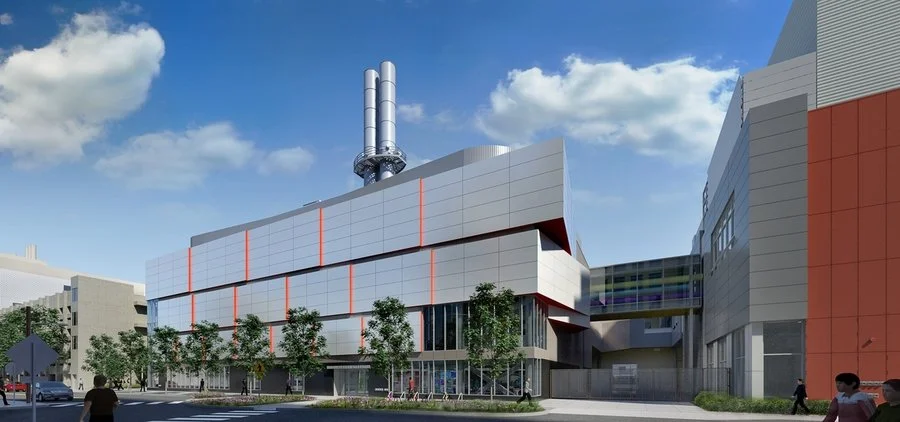
The MIT Central Utilities Plant (CUP) is a cogeneration facility that anchors the district energy system supporting MIT’s campus. By providing the necessary power, cooling, and heating to campus buildings, the CUP is the cornerstone of campus resiliency and sustainability, ensuring that utilities continue without interruption to protect campus research and occupant comfort.
Plasma Science and Fusion Center

This center is at the forefront of plasma physics and nuclear fusion research, working on projects like the SPARC tokamak and ARC reactor designs to develop carbon-free, net-energy-gain fusion power.
Masic Lab

The Masic Lab at MIT focuses on pioneering research in cement chemistry and the development of multifunctional cement-based materials. Recognizing the environmental impact of ordinary Portland cement due to its high carbon footprint, the lab aims to develop carbon-neutral solutions for concrete.
Brushett Lab